Precision Skin Cancer Treatment, Close to Home
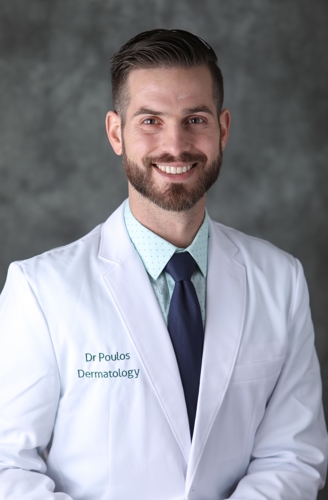
Skin cancer, when caught and addressed with the right approach, is one of the most treatable forms of cancer. At Gunnison Valley Health, board-certified dermatologist Dr. Nickolas Poulos offers micrographic dermatologic surgery (Mohs), the most precise and effective technique available for removing skin cancer while protecting the healthy tissue around it.
Mohs surgery works by removing skin cancer one thin layer at a time. Each layer is examined under a microscope immediately after removal, and the process continues until all cancerous cells are gone.
Why Mohs Surgery?
- Highest cure rate available. Several effective methods are used to treat skin cancer with reasonably high cure rates, but Mohs surgery produces the highest success rates.
- Tissue-sparing precision. The main advantage of Mohs surgery is that it offers precise microscopic control of the entire tumor margin while maximizing conservation of healthy tissue. This is especially important for cancers on the face, ears, nose, and other visible or functionally critical areas.
- Smaller scars, better outcomes. Mohs surgery produces smaller wounds and offers improved wound reconstruction opportunities because only tissue that contains cancerous cells is removed.
- Reduced risk of recurrence. Mohs surgery greatly diminishes the chance for cancer recurrence compared to other techniques.
What to Expect For Your Procedure
Mohs surgery is an outpatient procedure typically taking 3–6+ hours, sometimes requiring the whole day. It involves repeated cycles of removing thin layers of tissue, examining them under a microscope, and waiting for results (roughly 1–1.5 hours per stage) until the cancer is gone. You will be awake, likely with a pressure bandage, and can expect minimal pain.
What to Expect During Your Day
- Arrival & Prep: The morning usually starts with a review of the procedure, a local anesthetic injection (the most painful part), and the first tissue removal.
- The Process: The surgeon removes the visible tumor, then a very thin layer of surrounding tissue.
- Waiting Periods: You will spend most of your time in a waiting room while the lab processes and examines the tissue for cancer cells, which takes about 1–1.5 hours.
- Multiple Stages: If cancer remains, you will return to the operating room for another layer removal. This repeats until all cancer is removed.
- Reconstruction: Once clear, you will discuss repair options (stitches, skin flaps, etc.) to heal the wound, which can be done the same day or scheduled later
Preparing for Your Visit
- Schedule & Transportation: Clear the entire day and arrange for a driver to take you home, especially if the surgery is near your eyes or nose.
- Medications: Inform your doctor of all supplements and medications, especially blood thinners.
- Comfort: Wear comfortable, layered clothes and bring entertainment (books, tablet).
- Diet: Eat a normal breakfast, as you do not need to fast.
- Appearance: Do not wear makeup (if on the face), creams, or jewelry.
Post-Procedure Care
- Wound Care: The site will be bandaged, and you may experience swelling, bruising, or minor bleeding.
- Pain Management: Pain is usually minimal, managed with acetaminophen (Tylenol) and/or ibuprofen.
- Recovery: Plan for minimal activity immediately following surgery and keep the area dry for up to 72 hours.
Schedule Your Appointment Today
Your skin health is important. Call us at 970-641-3927 to schedule your appointment today.
-