Don’t Stress Over a Stress Test
- Category: Cardiopulmonary Rehabilitation
- Posted On:
GVH’s new treadmill is making heart health screenings easier, more comfortable, and more accurate than ever.
If hearing the words “stress test” makes your heart race a little faster, you’re not alone. The name alone can sound intimidating.
But here’s the good news: a cardiac stress test is far simpler, and far less scary than most people expect. And it can be one of the most valuable tools for catching heart concerns early, before they become serious.
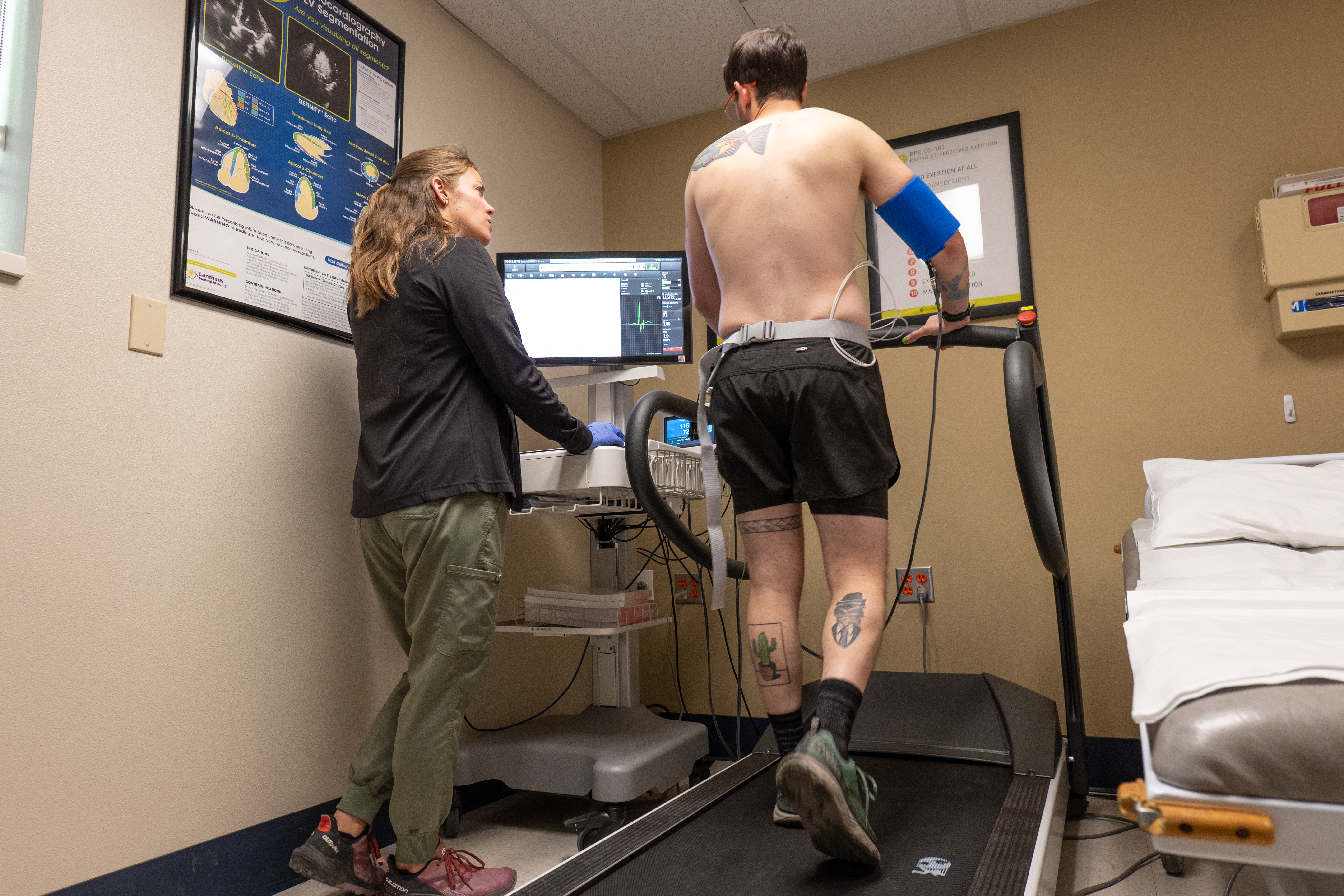
The Cardiopulmonary team at Gunnison Valley Health (GVH) recently upgraded their exercise stress test treadmill to a newer model packed with improved technology. This new piece of equipment offers smoother experience for patients and sharper, more reliable data for our care team. Here’s what you need to know.
What Is a Stress Test?
A cardiac exercise stress test measures how well your heart functions when it’s working hard. Think of it as a window into your heart’s performance under pressure.
A stress test can help identify:
How well your heart pumps blood and whether it’s getting adequate blood supply
How your heart performs during exercise compared to others your age and sex
Whether symptoms like chest pain or shortness of breath are triggered by physical activity
Any issues with your heart’s muscles or valves
How stable your heart’s electrical activity is, both at rest and during exercise
Changes in oxygen levels during exertion — especially important at our high altitude here in the Gunnison Valley
Who Might Need One?
A stress test is typically ordered by a physician when they suspect a heart issue or need more information to make a diagnosis. Common reasons include:
A family history of coronary artery disease
Episodes of unexplained chest pain or shortness of breath
A high calcium score from an imaging scan (available through GVH’s imaging department)
A diagnosis of or history of congenital heart disease
Working in a high-risk occupation, such as professional athletics or aviation
Wanting peace of mind before starting a new exercise program
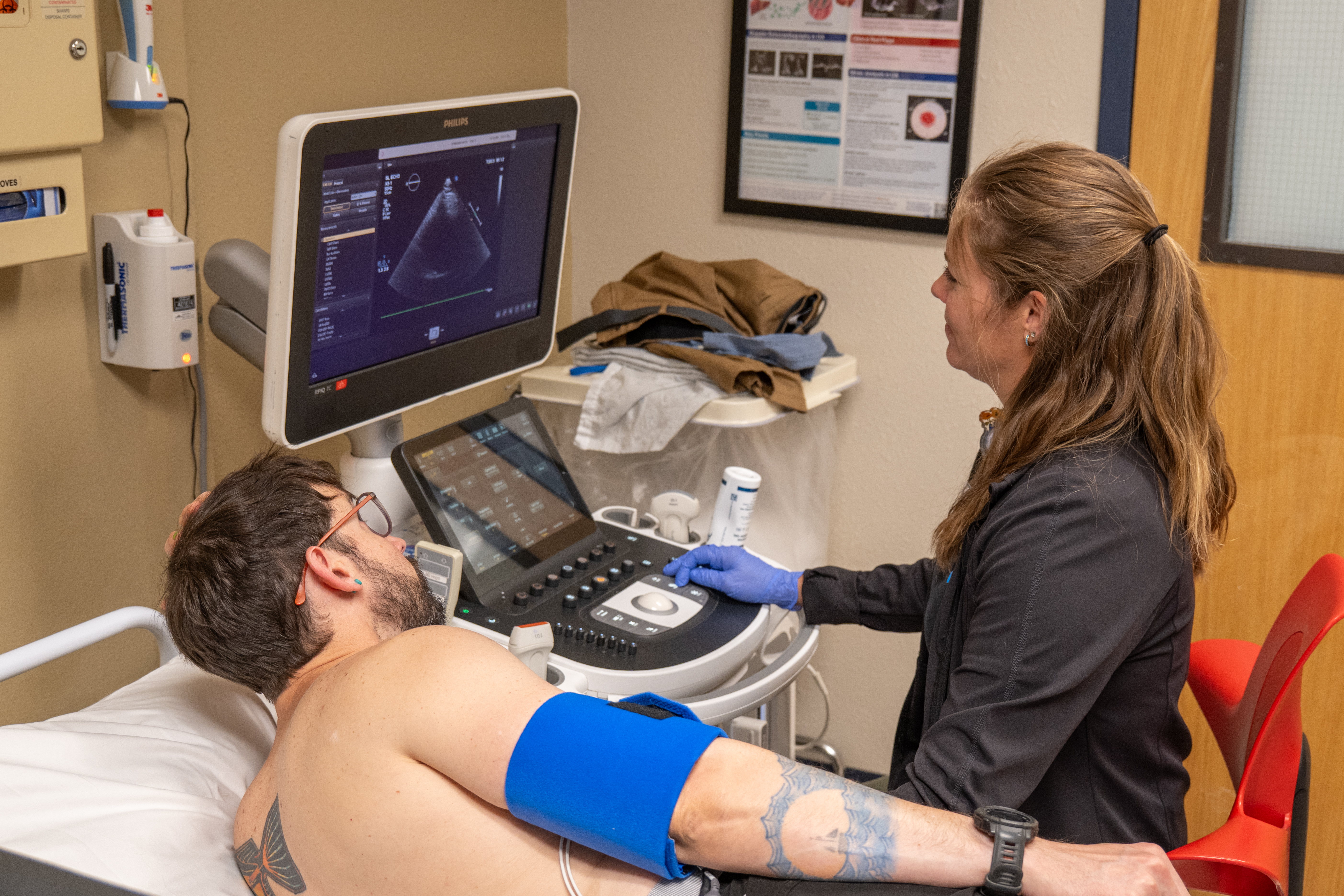
GVH’s Cardiopulmonary team offers two types of stress tests: the treadmill stress test and the stress echocardiogram, which adds an imaging component to examine the heart’s structures and valves before you even step on the treadmill.
What to Expect: It’s Not as Intense as You Think
The entire appointment typically takes about an hour, though the actual exercise portion usually lasts less than fifteen minutes.
“A lot of people think a stress test is going to be terrifying. But in reality, it’s not. We’re not trying to push anyone to the point of exhaustion. We really try to make everybody super comfortable and take our time with it. Once it’s over, people realize it wasn’t as scary as they thought.”
— Stetson Lusk, Cardiovascular Sonographer, GVH
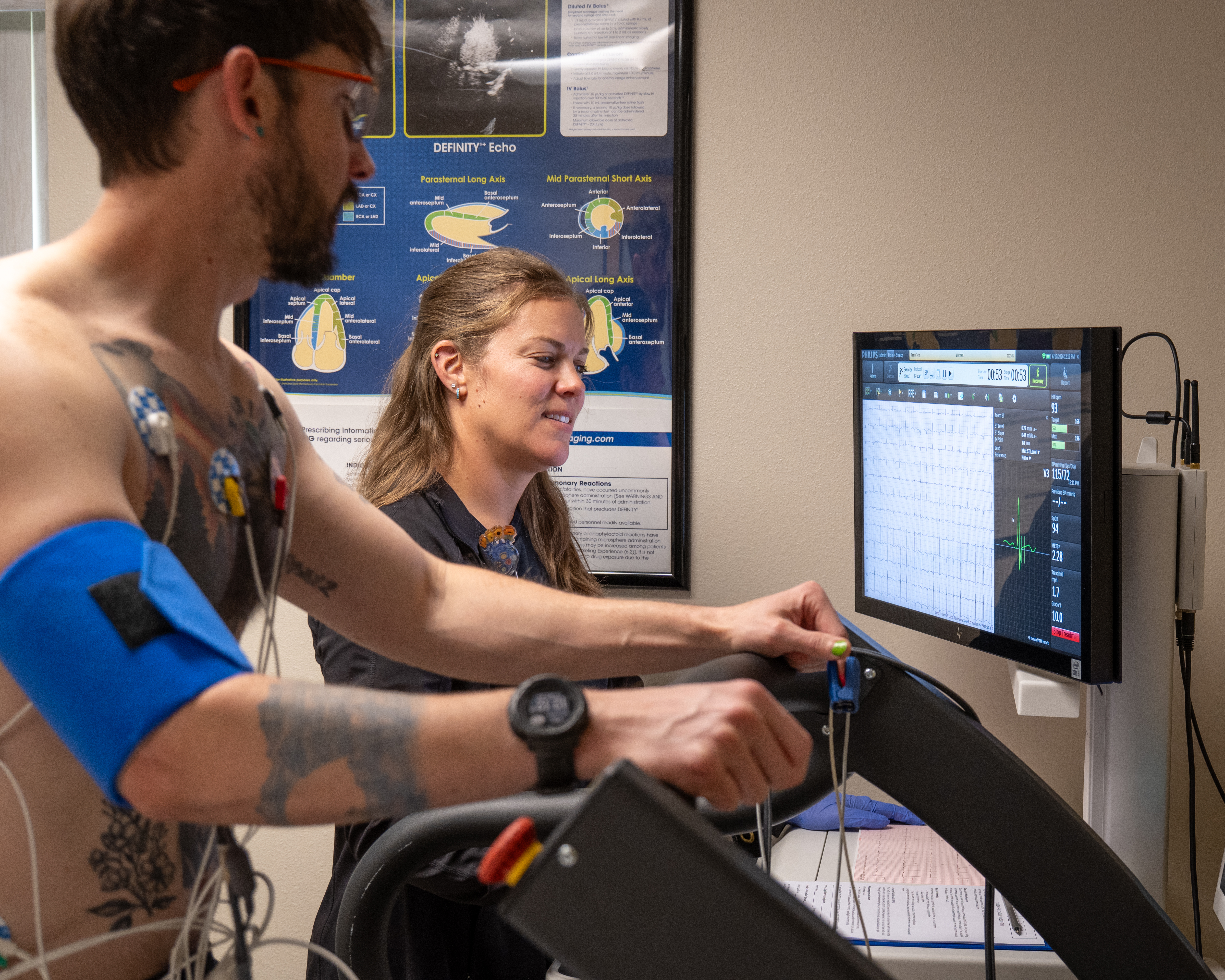
Before you step on the treadmill, small sticky electrode patches will be placed on your chest to record your heart’s electrical activity via an electrocardiogram (ECG). Your blood pressure and oxygen levels will also be monitored throughout the test.
The treadmill starts at a comfortable walking pace and gradually increases. The goal is to bring your heart rate to about 85% of your predicted maximum and not to wear you out. Most people are walking, not running. Think of it as a brisk walk, not a race.
What the New Treadmill Means for You
The experience of the test itself hasn’t changed but what happens behind the scenes has improved significantly. GVH’s previous treadmill was over ten years old. The new equipment automatically tracks blood pressure and oxygen levels in real time, which means our team spends less time manually taking readings and more time focused on you.
“It allows us to be more attentive to the patient and helps streamline the process. This ensures we’re able to double and triple check for accurate data.” — Stetson Lusk, Cardiovascular Sonographer, GVH
For patients, that means a more comfortable visit and greater confidence in the results.
Ready to Learn More About Your Heart Health?
If you have questions about cardiac stress testing or want to talk with someone about whether a stress test is right for you, GVH’s Cardiopulmonary team is here to help. Give us a call or ask your provider for a referral.
Call GVH Cardiopulmonary: (970) 641-7201