Spooky Season Lab Facts Part 1: Where the Bloodletting Begins.
- Category: Laboratory
- Posted On:
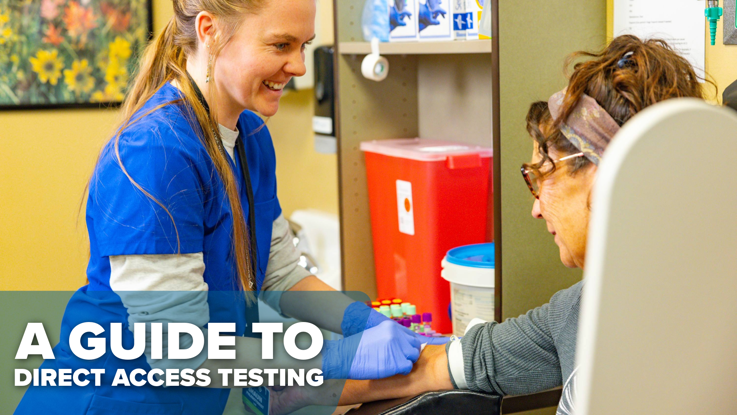
Before that needle ever touches your arm, our phlebotomists must make sure they have the right patient, the right tests, and the right collection supplies. Once the specimen is collected, every tube must be filled appropriately, labeled accurately, and handled according to specific requirements before it begins its journey through the laboratory.
The Colorful Tubes Aren't Just for Decoration
Different laboratory tests require different types of specimens and collection tubes. Some contain specific additives that help preserve the specimen or prepare it for a particular type of testing. The order in which tubes are collected can also matter because additives from one tube can potentially affect testing performed on another.
Our phlebotomists also pay close attention to factors such as collection technique, specimen volume, clotting, hemolysis, and proper specimen handling. These details may seem small, but they can make a big difference in whether a specimen is suitable for testing.
Why Does the Blood Draw Matter So Much?
A laboratory result is only as reliable as the specimen that reaches the laboratory.
An improperly collected, mislabeled, contaminated, or otherwise compromised specimen may produce inaccurate results or require the patient to provide another sample.
That's why our phlebotomy team takes the time to get it right the first time.
Whether they're collecting a tube for a routine cholesterol check, preparing specimens for blood bank testing, collecting cultures when infection is suspected, or drawing critical specimens for an emergency patient, our phlebotomists play an important role in getting the laboratory the information it needs.
And they're doing all of this while also helping patients feel comfortable during what can sometimes be an intimidating experience.
More Than Just a “Poke”
Phlebotomy requires technical skill, attention to detail, knowledge of specimen requirements, and plenty of experience working with people.
Our phlebotomists work with patients of all ages and backgrounds, including those who may be nervous about needles, difficult to draw, or require special collection considerations.
That combination of technical expertise and patient care is what makes phlebotomy such an important part of the laboratory.
From the moment a specimen is collected until the final result reaches a provider, there is an entire team working behind the scenes to make sure that sample can provide meaningful information about a patient's health.
So this Halloween, remember:
The real bloodletting isn't happening in a haunted house…
It's happening right here in the laboratory, one carefully collected tube/specimen at a time.
Fun Fact!
The average adult has approximately 10–12 pints of blood circulating throughout their body.
That's a lot of vampire juice!
Thankfully, our phlebotomists only need a few carefully collected tubes at a time.